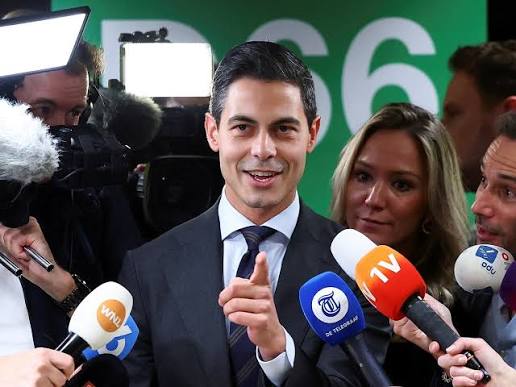
The Netherlands has a new government, and it looks different from what came before it. On 23 February 2026, King Willem-Alexander swore in a coalition led by Rob Jetten of the centrist D66 party, making him the youngest prime minister in Dutch history. His government brings together D66, the centre-right VVD, and the Christian Democrats (CDA) — a coalition built after 117 days of negotiation, considerably faster than the 223-day formation that produced the short-lived previous cabinet.
Why this coalition is unusual
What sets the Jetten government apart isn’t just who’s in it, but the arithmetic behind it. The three coalition parties hold 66 of the 150 seats in the House of Representatives — ten short of a majority. That makes this the Netherlands’ first minority government in decades, meaning every piece of legislation needs support from opposition parties to pass. The largest opposition bloc, the merged GreenLeft–Labour Party (GroenLinks–PvdA), has already signalled resistance to some of the coalition’s healthcare and welfare proposals, so governing by negotiation rather than majority vote will be a defining feature of this cabinet’s term.
Who’s responsible for what
Under the coalition agreement, titled “Let’s Get to Work. Building a Better Netherlands,” responsibilities are split roughly along these lines:
- D66 (Jetten’s party) oversees Education, Agriculture, Social Affairs, Housing, Climate, and Foreign Trade
- VVD, led by Dilan Yeşilgöz, holds Finance, Defence, Justice, and Health
- CDA takes Foreign Affairs, the Interior, and Economic Affairs
What the coalition is prioritizing
In the King’s Speech delivered on Prinsjesdag (Budget Day) in September 2026, the government laid out several priorities for the year ahead: continued investment in infrastructure maintenance for aging roads, bridges, and railways; a national investment institution aimed at funding breakthrough technology sectors, following the model of homegrown success stories like ASML; and further steps on nitrogen emissions policy affecting farming communities near protected nature areas, alongside financial support for farmers affected by the changes. The coalition has also introduced a new “freedom contribution” levy, requiring citizens to contribute financially toward national security spending starting in 2028, with businesses contributing separately.
What to watch next
Because the coalition lacks a parliamentary majority, the real test of this government won’t be the agreement itself, but whether it can hold together through its first full budget cycle and translate its plans into passed legislation. For residents and expats alike, the areas most likely to affect daily life in the coming year are housing policy, the nitrogen/farming dispute, and how the new security levy is eventually implemented.
We’ll be following the Jetten government’s progress in this category as policy decisions are finalized.
What do you feel about this post?

Like

Love

Happy

Haha

Sad